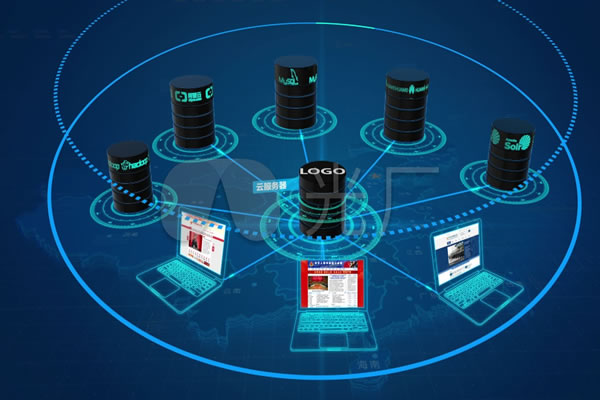
when relocating a company to a cloud environment, careful planning and risk assessment are crucial. this article focuses on the core aspects of the migration process, providing practical considerations for compliance, security, network and operation and maintenance, to help enterprises achieve smooth and secure cross-border hosting and operation.
why choose us server rental hosting when migrating to the cloud?
choosing us server rental hosting is often based on performance, availability and ecological advantages. for businesses targeting north american users or leveraging specific cloud/hosting resources, us nodes can reduce latency and increase availability. at the same time, business compliance and data sovereignty rules must be combined to balance performance and legal risks to ensure that migration decisions are well-founded.
pre-move assessment and planning
migration should be preceded by a thorough assessment: application dependency graph, data types, compliance boundaries, bandwidth requirements and downtime windows. develop a detailed migration plan and rollback strategy, listing key milestones and responsible persons. the contract and sla terms must be confirmed in advance, and details such as support response, backup frequency, and maintenance windows must be clearly defined to reduce migration uncertainty.
network connectivity and bandwidth optimization
network design needs to ensure connectivity and redundancy: evaluate public network egress, dedicated line/direct connection requirements, cross-border bandwidth and delay impact. configure flow control and qos to ensure bandwidth priority for key services, and consider cdn or edge acceleration to reduce user-perceived delays. conduct network stress testing in advance to verify performance during peak times or failures.
compliance, privacy and data sovereignty
cross-border migration involves data sovereignty and industry compliance requirements, which requires identifying restricted data and formulating hierarchical storage strategies. review the hosting provider's data processing terms, sub-processor list and audit capabilities. encryption, isolation and minimization strategies can be adopted for sensitive data to ensure compliance with legal and customer compliance requirements during us server rental and hosting.
security architecture and access control
in a us server hosting environment, it is crucial to have multiple layers of security in place. implement network isolation, zero-trust access, role-based permission management and fine-grained audit logs. both transmission and static data should be encrypted, and intrusion detection, firewalls, and security event response processes should be configured to ensure that abnormalities can be quickly located and dealt with.
backup, disaster recovery and recovery strategies
clarify the backup retention policy and recovery time objective (rto)/recovery point objective (rpo), and implement off-site or cross-availability zone backup in the managed environment. test the recovery process to ensure data integrity and recovery speed. develop drill plans for critical business recommendations to verify actual availability in the event of failure or data loss.
migration methods, tools, and phased switchover
choose the appropriate migration method based on business characteristics: cold migration, hot migration, or blue-green/grayscale switching, etc. use mature migration tools for data synchronization, change tracking and rollback control. phased migration can reduce risks by starting with non-critical systems for verification and then gradually switching to critical paths to ensure there is a fallback plan at every step.
operation and maintenance monitoring and performance verification
after the migration is completed, a continuous monitoring and alarm system will be established to cover performance, availability, security events and cost indicators. regularly conduct performance benchmark testing and capacity evaluation to optimize resource allocation. maintain communication channels with the hosting party, clarify the division of labor and support processes for operation and maintenance, quickly respond to abnormalities in the production environment, and continuously improve.
summary and suggestions
when an enterprise moves to a cloud environment, it needs to find a balance between compliance, security, network and operation and maintenance. it is recommended to conduct a comprehensive assessment beforehand, develop a phased migration plan and practice recovery, and choose a transparent hosting contract and auditable security measures. through careful planning and continuous monitoring, migration risks can be minimized and stable business operations ensured.
- Latest articles
- Popular tags
-
Practical Suggestions For Evaluating After-sales Service And Scalability Of 5 Us Station Cluster Servers
for seo and geo optimization, we provide practical suggestions for evaluating the after-sales service and scalability of 5 us site cluster servers, covering sla, response time, support channels, expansion models, geographical distribution and disaster recovery strategies. -

Reviews And Recommendations Of Real Defense American High Defense Servers
This article provides a comprehensive evaluation and recommendation of US high-defense servers to help users choose the right defense server. -